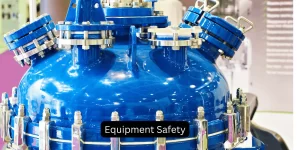

Reactor Safety in the Pharmaceutical Industry

In today’s pharmaceutical manufacturing world, safety is not just a regulation—it’s a fundamental necessity. Among all plant equipment, reactors are the heart of production for bulk drugs, intermediates, and specialty chemicals. Ensuring their safe operation protects not only the workforce but also product quality and environmental compliance. In this article, we will explore reactor safety in the pharmaceutical industry, covering design features, operational measures, and special considerations for hazardous reactions.
What We Will Cover
We’ll begin with an introduction to reactor safety, followed by detailed coverage of design considerations, operational controls, hazard-specific measures, and case-based examples. We’ll also discuss the role of critical safety devices such as safety relief valves (SRVs), rupture discs (RDs), cooling systems, inert gas blanketing, and surge tanks. Finally, we will look into best practices for maintenance, inspection, and operator training.
Introduction to Reactor Safety in Pharma

Reactor safety in the pharmaceutical industry refers to the systems, procedures, and equipment features designed to prevent accidents, control hazardous reactions, and ensure stable, reproducible processing. Pharmaceutical processes often involve highly exothermic reactions, flammable solvents, pressurized gases, and sensitive catalysts, making reactor safety an essential part of process design and daily operations.
The goals of reactor safety include:
- Preventing overpressure and thermal runaway
- Containing hazardous chemicals and vapors
- Protecting operators from physical and chemical hazards
- Minimizing environmental releases
- Maintaining product quality and yield
Key Reactor Safety Considerations
A typical pharmaceutical manufacturing site uses glass-lined, stainless steel, or alloy steel reactors, ranging in capacity from a few hundred liters to several kiloliters. The main safety considerations for these reactors include:
- Mechanical integrity: Vessel design pressure, corrosion resistance, and fatigue strength must match the process requirements.
- Process control: Monitoring and controlling temperature, pressure, and reaction rate to prevent excursions.
- Emergency response: Ensuring the presence of safety systems to handle abnormal situations like utility failure or exothermic surges.
Design and Engineering Controls
Pressure Ratings and Material Selection
Reactor material of construction (MOC) should be compatible with the chemicals used, considering corrosion, erosion, and potential reactivity. For example, glass-lined steel is preferred for acid-sensitive reactions, while stainless steel is chosen for high-pressure hydrogenation.
Pressure ratings should exceed maximum operating pressures, allowing for safe operation even during process upsets.
Safety Relief Valves (SRVs) and Rupture Discs (RDs)
An SRV is designed to automatically open when internal reactor pressure exceeds a preset limit, preventing vessel rupture. Rupture discs act as a secondary protection or in series with SRVs for corrosive or polymerizing substances. In hydrogenation, these devices are critical to handle sudden gas release.
Agitator and Seal Safety
Agitator design affects mixing efficiency and reaction control. Mechanical seals must be leak-proof, especially when handling toxic or flammable vapors. Double mechanical seals with nitrogen purging are common in pharma.
Temperature Control Systems
Most reactors are jacketed or have internal coils to circulate chilled water, brine, or thermal oil. Effective temperature control is vital for avoiding runaway reactions. Redundant temperature sensors and high-temperature alarms provide additional safety.
Earthing and Static Control
Pharmaceutical reactors handling solvents or gases must be earthed to prevent static buildup. Earthing jumpers between flanges and grounding straps for agitator shafts reduce ignition risks.
Operational Safety Measures
Batch Charging and Raw Material Handling
Safe charging procedures are crucial to avoid sudden exotherms or pressure spikes. Charging flammable solvents should be done under inert gas conditions with flow control.
Inert Gas Blanketing and Purging
Nitrogen blanketing prevents oxygen ingress, reducing fire and explosion risk. Purging before introducing reactive gases like hydrogen ensures no air is present.
Leak Detection and Vent Handling
Reactor vents should be connected to scrubbers or flare systems. Leak detection sensors for flammable gases or toxic vapors provide early warnings.
Emergency Shutdown Systems
Automated interlocks to stop agitators, close feed valves, and activate emergency cooling help prevent escalation during upsets.
Special Safety Measures for Hazardous Reactions
Exothermic Reaction Control in Reactor
Reactions like nitration or oxidation can generate large amounts of heat. Pre-cooling feeds, dosing reagents slowly, and using automatic temperature control systems are essential.
Catalyst Handling and Filtration
Many pharma reactions use pyrophoric catalysts like Raney Nickel, Pd/C, or Pt/C. These can ignite spontaneously when exposed to air. Safety measures include:
- Keeping catalysts wet with solvent
- Using inert atmosphere for filtration and transfer
- Avoiding high-speed agitation during filtration
Gas–Liquid Reactions (Hydrogenation, Chlorination)
These require precise gas flow control, pressure monitoring, and vent gas handling. Hydrogenation setups must have flame arrestors, non-return valves, and SRVs.
Case Study: Typical 2 KL Pharma Reactor Setup
A standard 2 KL glass-lined reactor for hydrogenation might include:
- SRV and RD on reactor top nozzle
- Nitrogen blanketing system
- Jacket with chilled brine for temperature control
- Mechanical agitator with double seal and nitrogen purging
- Earthing connections on vessel body and agitator shaft
- Vent line to activated carbon scrubber
- Instrumentation for temperature, pressure, and gas flow
- Surge tank connected to SRV outlet to collect discharge in case of relief
In case the SRV opens or liquid bumping occurs, the surge tank prevents hazardous discharge into the atmosphere and allows safe disposal.
Human Factors and Training
Even the best-designed systems rely on well-trained operators. Training should include:
- Understanding reaction hazards
- Proper use of personal protective equipment (PPE)
- Emergency response procedures
- Regular drills for scenarios like cooling failure or overpressure
Maintenance and Inspection Practices
Reactor safety depends on regular inspection of:
- SRVs and RDs for corrosion or blockage
- Agitator seals for leaks
- Jacket and coil integrity for corrosion
- Instrument calibration for temperature and pressure sensors
Preventive maintenance schedules reduce unplanned shutdowns and accidents.
FNQs
What are the safety measures required to work safely with a reactor?
Working safely with a reactor requires a combination of engineering controls, operational procedures, and personal protection. Essential measures include selecting the correct pressure and temperature ratings, installing safety devices like safety relief valves (SRVs) and rupture discs, maintaining efficient cooling systems, implementing nitrogen blanketing to prevent flammable atmospheres, ensuring proper earthing to avoid static discharge, and using surge tanks for pressure fluctuations. Regular maintenance, operator training, and adherence to standard operating procedures are equally critical.
What is process safety in pharma industry?
Process safety in the pharmaceutical industry focuses on preventing chemical releases, fires, explosions, and other hazardous events during manufacturing. It involves risk assessments, hazard identification (such as HAZOP studies), robust equipment design, safe handling of chemicals, automation for process control, and emergency response planning. In pharma, process safety is particularly important due to the frequent handling of hazardous solvents, toxic intermediates, and highly reactive chemicals in reactors.
What is safety in the pharmaceutical industry?
Safety in the pharmaceutical industry encompasses all measures taken to protect workers, equipment, products, and the environment from harm during drug manufacturing. This includes occupational safety (preventing workplace injuries), process safety (controlling chemical and operational risks), and product safety (ensuring medicines are free from contamination). Compliance with OSHA, GMP, and environmental standards forms the backbone of safety culture in pharma plants.
What are the elements of reactor safety?
The main elements of reactor safety include robust reactor design (material selection, pressure rating), temperature and pressure monitoring systems, safety relief devices (SRVs, rupture discs), inert gas blanketing, proper venting systems, cooling and heating controls, catalyst handling safety, earthing and bonding, surge tanks, and emergency shutdown systems. These elements work together to ensure safe and stable reactor operations while minimizing the risk of accidents.
Conclusion
Reactor safety in the pharmaceutical industry is a multi-layered discipline, combining engineering controls, operational procedures, and trained personnel. From material selection to catalyst handling and emergency response, every detail contributes to preventing incidents. By following industry best practices and adhering to standards such as NFPA, ASME, and OSHA guidelines, pharmaceutical companies can ensure safe, reliable, and compliant reactor operations.
References
- NFPA 69 – Standard on Explosion Prevention Systems. National Fire Protection Association.
- ASME Boiler and Pressure Vessel Code, Section VIII – Pressure Vessels. American Society of Mechanical Engineers.
- OSHA Process Safety Management Guidelines. Occupational Safety and Health Administration.
- Perry’s Chemical Engineers’ Handbook, 9th Edition. McGraw-Hill Education.
Read Also


